


It may take some time to start drinking alcohol after taking antibiotics.You should not drink during treatment.The number of days you need to wait before drinking alcohol varies depending on the drug.
Why are alcohol and antibiotics incompatible things?The fact is that the antibiotic you take automatically reduces the activity of your internal organs, which not only fight infection, but also cleanse the body after drinking alcohol.
Drinking alcohol while being treated with antibiotics means ruining your liver, kidneys and heart.After antibiotics, there is a serious disruption in the natural intestinal microflora.If you drink in this state, you will end up in a hospital bed.
It is worth mentioning the reduced effectiveness of the course combined with alcohol.In addition, alcohol can increase the resistance (drug resistance) of some microorganisms, which means that treatment of the infection will be delayed.
If you drink alcohol immediately after taking a pill without waiting, you will experience side effects such as:
- liver failure;
- nausea and vomiting;
- headache;
- dizziness;
- clouding of mind.
These are the main reasons why alcohol after taking antibiotics is allowed only a couple of days after the end of the course.
Abstinence period
Most often, when asked how many days later you can return to an “alcoholic” life, the answer is several days.The period of abstinence varies from three days to a full week.Regardless of what specific product was used and how long it took to completely remove it from the body.
Even if the instructions do not indicate whether you can drink alcohol after taking antibiotics, it is better to postpone the festivities for a few days.It’s not just a matter of the combination of drugs and alcohol, but also a fragile body.Even a minimal dose can be a serious poison for him.
Strict ban
A strict ban on drinking alcohol during an antibiotic course is not a whim of doctors.Even if you do not notice any side effects when combining these two components, this does not mean that the body is not damaged.
There is a whole group of antibiotic drugs, the combination of which with alcohol is strictly prohibited.The annotation for such drugs always states that they are not compatible with ethanol.In addition, the appropriate warning will be given to the patient by the doctor.
When drinking alcohol together with lincosamides, prepare for damage to the central nervous system and liver.Another group of drugs in which you should not drink alcohol are aminoglycosides.These antibiotics are considered one of the most powerful; they are not recommended to be combined even with other medications.Drinking alcohol is strictly contraindicated.
Time frame
There are antibiotics, in the instructions for which you will not find information about compatibility with ethyl alcohol.These include antifungal agents and medications containing penicillin.
The minimum period of abstinence is three days.Of course, if you have questions, it is better to contact your doctor, who will explain the answers to your questions.
Admission rules
Buying antibiotics on your own can lead to side effects or simply zero effectiveness.
It is better to eat meat boiled, while choosing chicken or turkey, make stewed vegetables.It is important to maintain a drinking regime.Normally, a person needs 30 ml per kilogram of weight.However, during illness, intoxication syndrome increases, so it is advisable to increase the drinking rate per liter.Keep in mind that high temperature increases the body's need for fluid. In addition, it is actively used to flush out bacterial decay products from the body.
When can you start drinking alcohol after taking antibiotics?
General information about antibiotics
It may take some time to start drinking alcohol after taking antibiotics.You should not drink during treatment.The number of days you need to wait before drinking alcohol varies depending on the drug.
Why are alcohol and antibiotics incompatible things?The fact is that the antibiotic you take automatically reduces the activity of your internal organs, which not only fight infection, but also cleanse the body after drinking alcohol.
Drinking alcohol while being treated with antibiotics means ruining your liver, kidneys and heart.After antibiotics, there is a serious disruption in the natural intestinal microflora.If you drink in this state, you will end up in a hospital bed.
It is worth mentioning the reduced effectiveness of the course combined with alcohol.In addition, alcohol can increase the resistance (drug resistance) of some microorganisms, which means that treatment of the infection will be delayed.
If you drink alcohol immediately after taking a pill without waiting, you will experience side effects such as:
- liver failure;
- nausea and vomiting;
- headache;
- dizziness;
- clouding of mind.
These are the main reasons why alcohol after taking antibiotics is allowed only a couple of days after the end of the course.
Abstinence period
Most often, when asked how many days later you can return to an “alcoholic” life, the answer is several days.The period of abstinence varies from three days to a full week.Regardless of what specific product was used and how long it took to completely remove it from the body.
Even if the instructions do not indicate whether you can drink alcohol after taking antibiotics, it is better to postpone the festivities for a few days.It’s not just a matter of the combination of drugs and alcohol, but also a fragile body.Even a minimal dose can be a serious poison for him.
Strict ban
A strict ban on drinking alcohol during an antibiotic course is not a whim of doctors.Even if you do not notice any side effects when combining these two components, this does not mean that the body is not damaged.
There is a whole group of antibiotic drugs, the combination of which with alcohol is strictly prohibited.The annotation for such drugs always states that they are not compatible with ethanol.In addition, the appropriate warning will be given to the patient by the doctor.
When drinking alcohol together with lincosamides, prepare for damage to the central nervous system and liver.Another group of drugs in which you should not drink alcohol are aminoglycosides.These antibiotics are considered one of the most powerful; they are not recommended to be combined even with other medications.Drinking alcohol is strictly contraindicated.
Time frame
There are antibiotics, in the instructions for which you will not find information about compatibility with ethyl alcohol.
The minimum period of abstinence is three days.Of course, if you have questions, it is better to contact your doctor, who will explain the answers to your questions.
Admission rules
Buying antibiotics on your own can lead to side effects or simply zero effectiveness.
It is better to eat meat boiled, while choosing chicken or turkey, make stewed vegetables.It is important to maintain a drinking regime.Normally, a person needs 30 ml per kilogram of weight.However, during illness, intoxication syndrome increases, so it is advisable to increase the drinking rate per liter.Keep in mind that high temperature increases the body's need for fluid. In addition, it is actively used to flush out bacterial decay products from the body.
Why can't you combine alcohol and antibiotics?
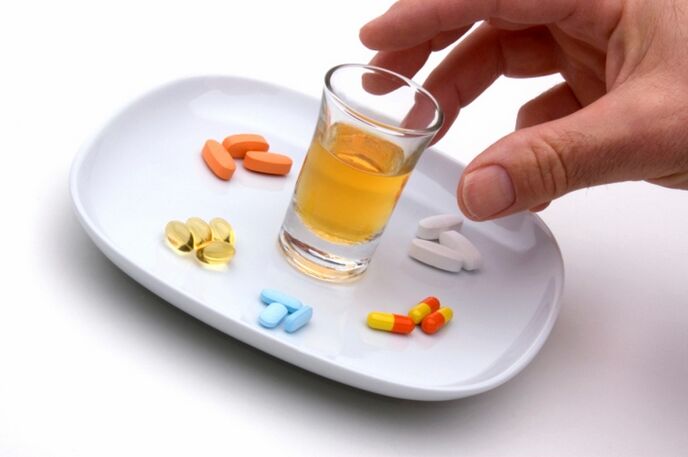
At a time when these drugs had not yet been invented, many people died from bacterial infections.Many diseases were considered incurable due to the lack of such drugs.
Antibiotics should not be taken without a doctor's prescription and it is very important to follow the rules for taking them.In addition, you need to know that antibiotics are incompatible with alcohol.This article contains answers to all questions related to taking antibiotics.
Rules for taking antibiotics
Before prescribing an antibiotic, you must inform your doctor about the following:
- medications that are currently being taken;
- pregnancy or lactation period;
- kidney or liver disease;
- diabetes mellitus
And also if observed previously:
- occurrence of side effects;
- development of allergic reactions;
- recent use of antimicrobial agents.
Reasons for the incompatibility of alcohol and antibiotics
Apart from the fact that taking antibiotics significantly strains the functioning of the kidneys and liver, and taking them together with alcohol only aggravates the situation, because ethanol slows down the functioning of the excretory systems, there is another important reason for the incompatibility.
Alcohol is perceived by the body as a drug, which leads to the alcohol molecules being processed by the body incorrectly.
Consequences of non-compliance with the rules of taking antibiotics
If you violate the rules for taking antibiotics, as well as if you choose the wrong drug or an incorrectly prescribed treatment regimen, unwanted side effects often occur.
Only a serious attitude towards taking antibiotics will give the required therapeutic effect.
What antibiotics are strictly prohibited from being taken with alcoholic beverages?
There are drugs on the pharmacological market whose annotations do not contain information about interactions with alcohol.
Possible consequences of combining antibiotics and alcohol
There is no way to know in advance how a particular organism will react to the simultaneous use of alcohol-containing liquids and antibiotics.Damage can occur to any area of the body.
The consequences can be sad, it all depends on the individual and his health.Negative consequences are always suffering of the body, in whole or in part.Negative effects can be easily avoided by simply avoiding the use of alcohol along with antibiotics.
And to get the best treatment results, you need to give up alcohol, any, even the weakest.